
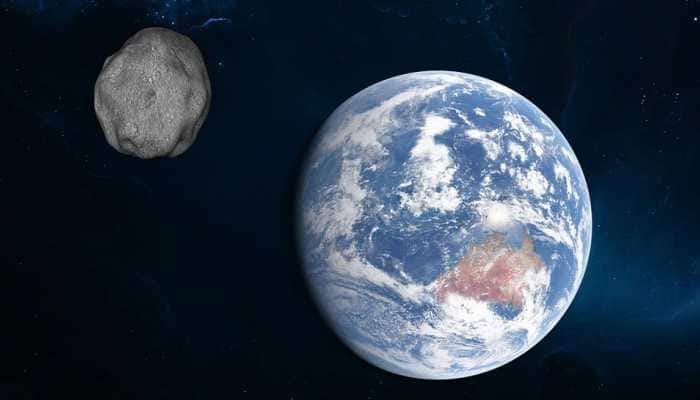
Washington: Using information gathered at NASA’s Infrared Telescope Facility (IRTF) and circle examination from the Center for Near-Earth Object Studies (CNEOS) at NASA’s Jet Propulsion Laboratory, researchers have affirmed that Near-Earth Object (NEO) 2020 SO is, truth be told, a 1960’s-Era Centaur rocket promoter.
The item, found in September by space experts looking for close Earth space rocks from the NASA-subsidized Pan-STARRS1 study telescope on Maui, earned revenue in the planetary science network because of its size and bizarre circle and was concentrated by observatories around the globe, as per an official delivery.
Further examination of 2020 SO’s circle uncovered the article had approached Earth a couple of times throughout the long term, with one methodology in 1966 bringing it sufficiently close to propose it might have started from Earth.
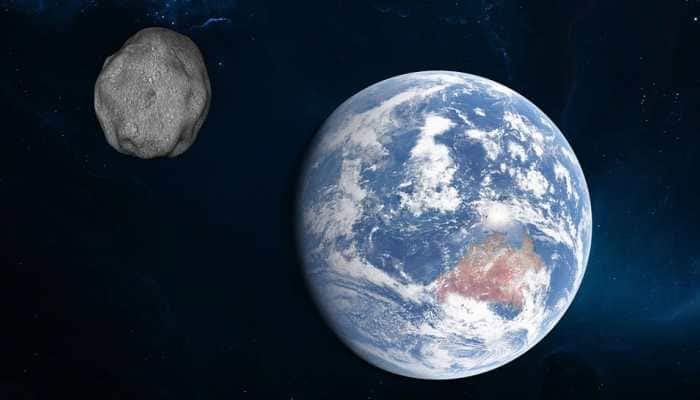
Contrasting this information and the historical backdrop of past NASA missions, Paul Chodas, CNEOS chief, closed 2020 SO could be the Centaur upper stage rocket sponsor from NASA’s disastrous 1966 Surveyor 2 mission to the Moon.
Outfitted with this information, a group drove by Vishnu Reddy, a partner educator and planetary researcher at the Lunar and Planetary Laboratory at the University of Arizona, performed subsequent spectroscopy perceptions of 2020 SO utilizing NASA’s IRTF on Maunakea, Hawai’i.
“Because of outrageous faintness of this item following CNEOS forecast it was a provoking item to portray” said Reddy. “We got shading perceptions with the Large Binocular Telescope, or LBT, that recommended 2020 SO was not a space rock.”
Through a progression of subsequent perceptions, Reddy and his group dissected the 2020 SO’s creation utilizing NASA’s IRTF and thought about the range information from the 2020 SO with that of 301 tempered steel, the material Centaur rocket supporters were made of in the 1960’s.
While not quickly an ideal match, Reddy and his group persevered, understanding the disparity in range information could be a consequence of dissecting new steel in a lab against steel that would have been presented to the unforgiving states of room climate for a very long time. This drove Reddy and his group to do some extra examination.
“We realized that in the event that we needed to make a valid comparison, we’d need to attempt to get otherworldly information from another Centaur rocket supporter that had been in Earth circle for a long time to then check whether it better coordinated 2020 SO’s range,” said Reddy.
“On account of the extraordinary speed at which Earth-circling Centaur supporters traverse the sky, we realized it would be incredibly hard to bolt on with the IRTF sufficiently long to get a strong and dependable informational index.”
Notwithstanding, on the morning of Dec 1, Reddy and his group pulled off what they thought would be unthinkable. They noticed another Centaur D rocket supporter from 1971 dispatch of a correspondence satellite that was in Geostationary Transfer Orbit, sufficiently long to get a decent range.
With this new information, Reddy and his group had the option to think about it against 2020 SO and discovered the spectra to be predictable with each another, along these lines completely finishing up 2020 SO to likewise be a Centaur rocket sponsor.
“This end was the aftereffect of an enormous collaboration,” said Reddy. “We were at last ready to unravel this secret on account of the incredible work of Pan-STARRS, Paul Chodas and the group at CNEOS, LBT, IRTF, and the perceptions around the globe.”
2020 SO made its nearest way to deal with Earth on Dec 1, 2020, and will stay inside Earth’s circle of gravitational predominance – a locale in space called the “Slope circle” that broadens about 930,000 miles (1.5 million kilometers) from our planet – until it escapes once again into another circle around the Sun in March 2021.
As NASA-subsidized telescopes review the skies for space rocks that could represent an effect danger to Earth, the capacity to recognize normal and fake items is significant as countries proceed to investigate and more fake articles wind up in circle about the Sun. Cosmologists will keep on noticing this specific relic from the early Space Age until it’s gone.
 The FamilyGuru